How New South Dallas Redevelopment Shapes 75215 Housing
April 23, 2026
April 23, 2026
If you have been watching South Dallas and wondering what redevelopment really means for housing in 75215, you are not alone. Big projects, new planning efforts, and longtime neighborhood character are all part of the picture, which can make the area feel both promising and hard to read. The good news is that the story is becoming clearer: this is not a full reset, but a layered evolution that could affect what you buy, where you buy, and how you think about long-term value. Let’s dive in.
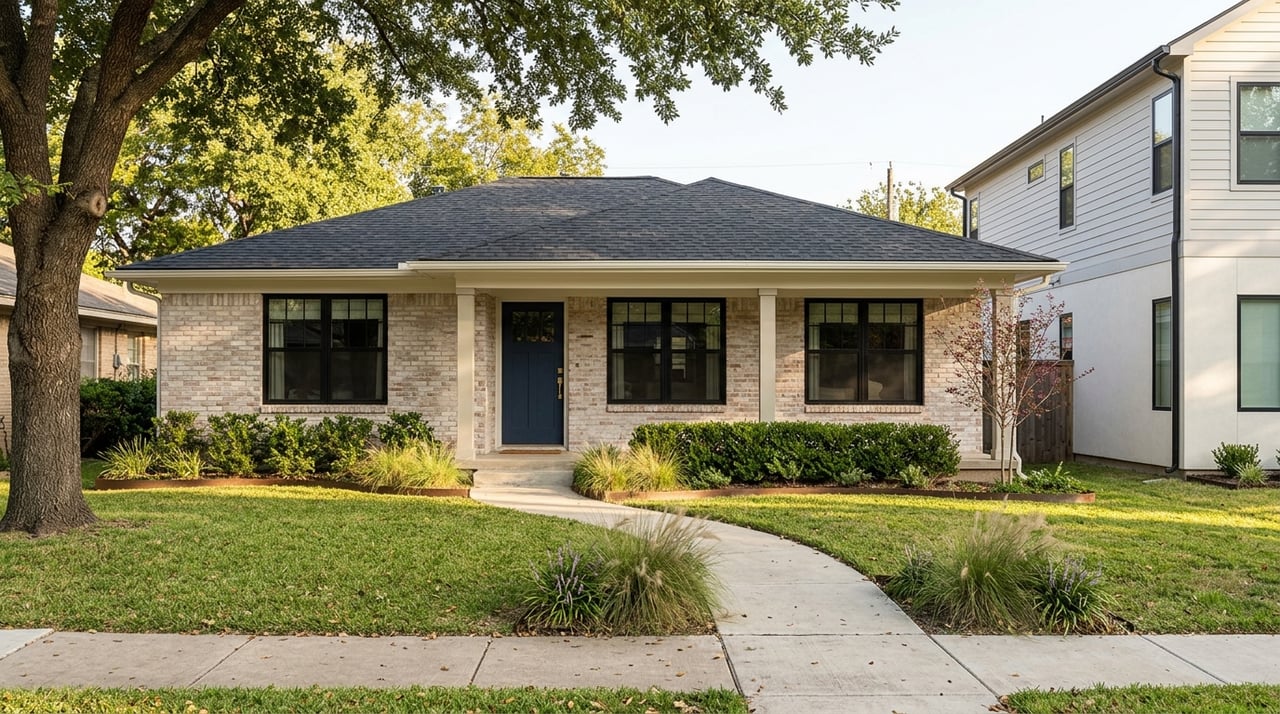
The first thing to know is that New South Dallas housing is not being rebuilt from scratch. In 75215, older residential fabric still plays a major role, even as new public investment, corridor planning, and mixed-income development move forward. That makes this ZIP code different from areas where large-scale redevelopment wipes the slate clean.
According to Census Reporter’s profile for 75215, the ZIP has 18,895 residents, 8,316 housing units, and a median value of owner-occupied homes of $190,100. At the same time, the city’s planning materials describe a built environment that already includes single-family homes, duplexes, townhomes, multifamily apartments, commercial corridors, industrial edges, and vacant land. That mix helps explain why change here is showing up in several forms at once.
A major driver of that change is the South Dallas/Fair Park Area Plan, which Dallas City Council adopted on June 25, 2025. The city says the plan followed four years of work and more than 100 community events, and the next step is to align zoning and development standards with the adopted vision.
That matters if you are buying or selling in 75215 because redevelopment is no longer just a loose idea. It is now connected to an adopted planning framework that guides where growth, preservation, and investment are expected to happen. For buyers, that can influence future land use around a home. For sellers, it can affect how your property fits into the bigger story of the neighborhood.
The plan is not calling for the same kind of change on every block. Instead, city materials point to specific corridors and nodes, including 2nd Avenue, Elsie Faye Heggins Street, Malcolm X Boulevard, the Martin Luther King Jr. DART station area, and Queen City.
This is one reason 75215 can feel block-by-block rather than uniform. In some places, you may see stronger momentum for mixed-use or multifamily infill. In others, the emphasis is more on preserving existing homes and reinforcing the neighborhood pattern already in place.
Based on the adopted plan, station-area planning, and current projects, three housing patterns appear to be taking shape in and around 75215.
Some parts of South Dallas are expected to remain primarily residential in character. The city’s plan materials say Queen City should continue toward a historic overlay and largely remain community residential, with new construction blending into the existing housing pattern.
For you as a buyer, that suggests some areas may continue to offer a more traditional neighborhood feel, even as nearby corridors evolve. For homeowners, it also points to the importance of understanding preservation expectations before making renovation or resale decisions.
Another likely pattern is new housing on vacant or underused parcels. A good example is Bonton Gardens, which city memo materials describe as a 36-unit mixed-income multifamily project on Bexar Street with 20-year affordability covenants, utility-included rents, ADA-accessible units, and service connections through Bonton Enterprises.
This kind of project shows that redevelopment is not only about higher-end housing. It also includes housing intended to broaden options and support longer-term neighborhood stability.
The third pattern is mixed-use development along major streets and transit-connected areas. In city draft materials, 2nd Avenue is envisioned as a walkable street with retail, restaurants, office, residential, and mixed-use buildings, with low-rise massing and reduced parking minimums.
That kind of corridor planning can change how nearby housing feels over time. Homes close to these nodes may eventually sit near more services and activity, while homes farther from them may retain a quieter residential setting.
One of the most important parts of the 75215 story is that redevelopment is happening in a place with deep historic roots. The city says the South Boulevard–Park Row Historic District includes more than 100 houses built mainly from about 1910 to 1935, while Preservation Dallas identifies Queen City as the earliest surviving African-American community in South Dallas, with buildings dating from 1905 to 1929.
That history matters because it shapes how change is being discussed and planned. The city’s approach is not simply about adding density wherever possible. It also includes preserving existing housing stock and easing displacement pressure.
For buyers, this means you should not evaluate a home in 75215 on price alone. Historic context, future overlay rules, neighborhood pattern, and nearby corridor plans can all affect what ownership may look like over time.
Housing demand is rarely driven by homes alone. It is also influenced by what is being added around them, including parks, culture, services, and neighborhood retail.
In February 2026, Dallas approved an agreement with Fair Park First for the design, fundraising, and construction of a new Fair Park community park. The city frames this as a major green-space investment for South Dallas.
For homebuyers, that signals the kind of amenity growth that can improve everyday livability. For nearby owners, it is another sign that public investment is helping reshape how the area functions over time.
The Forest Theater redevelopment is another meaningful piece of the picture. The city approved an $8 million grant in November 2024 for rehabilitation of the historic theater at 1918 Martin Luther King Jr. Boulevard, along with a substantial addition, café, roof deck, event lawn, festival street, and education center with creative-production space.
Projects like this often do more than restore a building. They can strengthen a corridor’s identity, bring more activity to surrounding blocks, and support the case for nearby residential investment.
Redevelopment is also showing up in smaller commercial projects. The South Dallas/Fair Park Opportunity Fund’s annual report says Malcolm’s Point, at Malcolm X Boulevard and Al Lipscomb Way in 75215, broke ground in late 2025 and is expected to be completed by the end of 2026, bringing retail, restaurant, office, and community space.
That is worth watching because neighborhood-serving commercial space often changes how residents use an area day to day. Instead of only looking at housing inventory, buyers should also pay attention to what kinds of services may be arriving nearby.
If you are considering a home in 75215, redevelopment creates both opportunity and complexity. A lower entry price than many other parts of Dallas may catch your attention, but future use and planning context matter more here than a simple price-per-square-foot comparison.
Here are a few smart questions to ask before you buy:
This is where local guidance matters. In a market with layered change, two homes with similar square footage can offer very different long-term experiences depending on the surrounding block and planning context.
If you own property in 75215, redevelopment may influence your home’s market story, even if your block has not changed dramatically yet. Buyers are increasingly likely to ask about nearby projects, future plans, and the character of the immediate area.
That means your pricing and marketing strategy should be specific. Instead of treating South Dallas as one broad category, it helps to position your home around its exact location, nearby amenities, neighborhood pattern, and any preservation context that supports its appeal.
For some properties, the strongest story may be historic character or established residential fabric. For others, it may be proximity to evolving corridors, Fair Park investment, or mixed-use momentum. The key is to present the home within the right local context.
The clearest way to understand redevelopment in New South Dallas is this: 75215 is being layered with new parks, arts space, corridor investment, and mixed-income housing while older residential fabric remains central to the area’s identity. That creates a market with real potential, but not a one-size-fits-all pattern.
If you are buying, you will want to look beyond headline buzz and study each block on its own terms. If you are selling, you will want a marketing and pricing approach that reflects how your property fits into this evolving, highly localized market.
If you want help making sense of where redevelopment may matter most for your move, Diane Bearden offers thoughtful, neighborhood-focused guidance to help you evaluate your options with clarity and confidence.
Stay up to date on the latest real estate trends.
August 20, 2026
August 13, 2026
August 6, 2026
August 6, 2026
July 23, 2026
July 16, 2026
July 9, 2026
July 2, 2026
June 25, 2026
Diane loves sharing her knowledge with her first-time home buyers and making their purchase a memorable event. She can advise you and create a portfolio that can give you that added edge to be successful in your real estate transaction.
Diane Bearden Barrett
6318 GASTON AVE DALLAS TX 75214