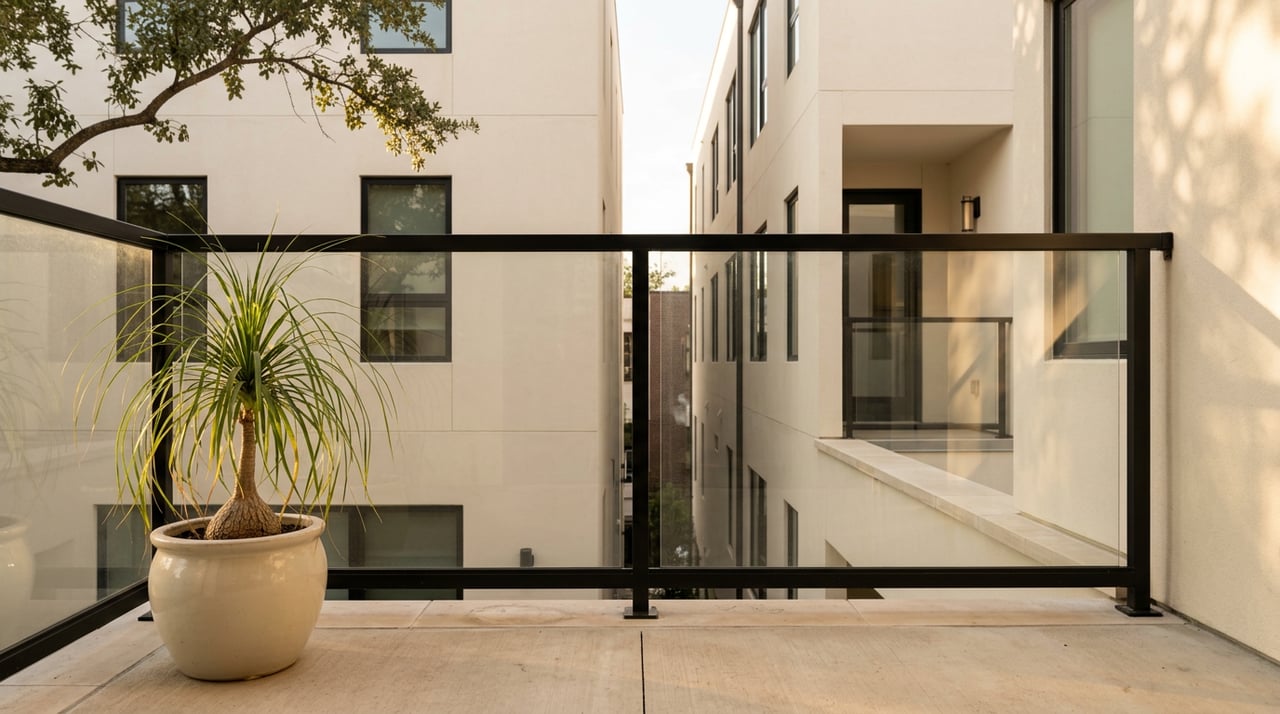
Uptown Dallas Condo Full Review Rules to Check First
August 20, 2026
August 20, 2026
You have found the unit. Skyline sliver from the balcony, ten-minute walk to West Village, a building that feels solid the moment you step off the elevator. You are ready to write an offer. Two weeks ago, the rules for financing that offer changed in a way that has nothing to do with your credit score, your down payment, or the unit itself. It has to do with a fund most Uptown buyers have never asked to see: the association's reserve balance.
On August 3, 2026, Fannie Mae eliminated its Limited Review process for condominiums, and Freddie Mac retired its matching Streamlined Review pathway. For years, a buyer putting down 10 percent or more on a primary residence could close on a condo without a lender ever digging into the building's finances. That shortcut is gone. Every conventional condo loan now requires a Full Review of the homeowners association itself, regardless of down payment size. If you are shopping in Uptown right now, this changes the order of operations on your offer.
Here is the part that makes this more than a national headline. Texas has never required a condo association to commission a reserve study or hold reserves at any particular level. The Texas Uniform Condominium Act, Property Code Chapter 82, authorizes a board to include reserves in its budget and requires the resale certificate to disclose the current reserve balance and whether a study has been done. It stops there. No funding floor, no study cycle, no state agency checking anyone's work. For a long time, that silence did not matter much to a buyer, because Limited Review let plenty of loans close without anyone testing whether the association's number was adequate.
That gap is exactly what federal lending rules are now stepping into. A Texas board that never had to prove its reserves were sufficient to any regulator now has to prove it to a lender, on every conventional purchase, or the building loses access to conventional financing entirely.
Full Review is not a vague gesture toward due diligence. It tests specific thresholds, and a building that fails even one of them becomes what the industry calls non-warrantable, meaning Fannie Mae and Freddie Mac will not buy the loan.
| Trigger | Threshold |
|---|---|
| Reserve fund | Below 10% of annual budgeted assessment income (rising to 15% for applications dated on or after January 4, 2027) |
| Active litigation | Includes construction defect claims against the association |
| Delinquent units | 15% or more of units 60+ days behind on HOA dues |
| Ownership concentration | One entity owning more than 20% of units in a project with 21 or more units |
| Commercial space | Exceeds 35% of total building square footage |
| Master insurance deductible | Per-unit deductible above $50,000, effective for applications dated on or after July 1, 2026 |
An association that already has a reserve study now has to fund to the highest recommended level in that study starting this month. Baseline or bare-minimum funding is no longer an acceptable answer to a lender's questionnaire.
Uptown's condo inventory spans decades, and that range matters here. There are 1990s and early 2000s boutique mid-rises along McKinney Avenue and in State Thomas, built before anyone was writing reserve studies as a matter of course. There are 2000s and 2010s towers near Turtle Creek and the Harwood District with fuller amenity packages and correspondingly higher dues. And there is new construction on the horizon, most visibly the Residences at The Dallas Edition, the roughly 60-unit condo component of Kaizen Development Partners' $650 million Chalk Hill project rising at 3031 North Harwood Street, with condo pricing reported to start near $1.5 million for one-bedroom units. New construction carries its own warrantability wrinkle, since presale thresholds apply before a project's units are broadly financeable at all.
The timing adds pressure on both sides of the table. Inventory across Uptown has been climbing, and comparable listings in nearby Victory Park have been sitting on the market past 100 days as of mid-2026, giving buyers real negotiating room they have not had since before the pandemic. In the broader Dallas luxury condo segment spanning 20 buildings across Turtle Creek, Uptown, the Arts District, and Victory Park, first-half 2026 sales volume fell roughly 43 percent year over year even as average sale price rose about 5 percent to nearly $3.6 million, a market moving from rapid appreciation toward something closer to balance. That combination, more inventory and slower absorption, means a building that gets flagged non-warrantable does not just lose one buyer. It loses access to the entire pool of conventional-financing buyers at exactly the moment when that pool already has more competing choices.
If you are financing above the 2026 conforming loan limit for Dallas and Collin County of $806,500, which is common for larger Uptown units, the same warrantability rules still apply on the jumbo side, and documentation requirements tend to be even more rigorous at that price point.
The good news is that Texas made the paper trail cheaper and faster to get. Senate Bill 711, effective September 1, 2025, capped the fee an association can charge for a standard resale certificate at $375, down from a previously uncapped amount, and set a separate $75 cap on an updated certificate. The association still has 10 days from a written request to deliver it.
That resale certificate is where the answer to the reserve question lives. Under Section 82.157, it must disclose the current assessment amount, anything past due, any special assessment approved but not yet collected, the current operating budget, the reserve balance, and whether a reserve study has been completed, along with pending litigation and any rental restrictions. Historically, buyers requested this document during the option period, sometimes as an afterthought. Given that your lender is going to need the same information for Full Review regardless, there is no reason to wait. Ask your agent to request the resale certificate before you write the offer, not after.
There is a second piece worth checking with your own insurance agent before closing. As of July 1, 2026, Fannie Mae capped the maximum allowable per-unit deductible on a master property insurance policy at $50,000. If the association's master policy carries a deductible anywhere near that ceiling, and many boards are raising deductibles toward it to offset rising premiums, you as the unit owner are now required to carry an HO-6 policy that explicitly bridges that gap, covering the same perils, such as wind or hail, at a limit at least equal to the deductible. Skip that conversation and a burst pipe or hail event could leave you personally responsible for tens of thousands of dollars the master policy never touches.
Full Review means your lender is collecting years of financial statements, reserve studies, meeting minutes, and insurance declarations before final approval, not a summary. If the board is organized and responsive, that adds friction but not necessarily delay. If the board is slow or the paperwork is scattered, expect a standard 30-day closing to stretch closer to 45 or 60 days. Build that into any timeline promises you make to a seller or a lease you are trying to break.
Does this affect cash buyers? Full Review only governs loans that Fannie Mae or Freddie Mac will purchase. A cash buyer or someone using a portfolio loan sidesteps the review entirely, though a building that fails warrantability still shrinks the pool of buyers available when that owner eventually wants to sell.
Does Texas require a reserve study? No. State law never has. What changed is that federal lending standards now function as the enforcement mechanism state law never provided, which is why this rule change lands harder on a Texas building than it would on one in a state that already mandated reserve funding.
What happens if the building fails Full Review? It becomes non-warrantable, meaning conventional financing is off the table for every unit in it. Buyers there typically need a portfolio loan, which usually comes with a higher rate and a larger down payment requirement.
An HOA's reserve fund used to be a detail you could get to eventually. In Uptown right now, it belongs at the top of your list, before you fall for the view. If you are weighing a specific building or want a second set of eyes on a resale certificate before you commit, Diane Bearden can walk through the numbers with you and help you write an offer that closes on schedule.
Stay up to date on the latest real estate trends.
October 8, 2026

October 1, 2026
September 24, 2026
September 17, 2026
September 10, 2026
September 3, 2026
August 27, 2026
August 20, 2026
August 13, 2026
Diane loves sharing her knowledge with her first-time home buyers and making their purchase a memorable event. She can advise you and create a portfolio that can give you that added edge to be successful in your real estate transaction.
Diane Bearden Barrett
6318 GASTON AVE DALLAS TX 75214