Kessler Park Renovation Rules Before You Buy
August 27, 2026
August 27, 2026
In the first two weeks of August 2026, homes closed in the Kessler Park and Stevens Park area at asking prices from $499,900 to $1.6 million, all within the same 75208 zip code, the same rolling hills, the same canopy of hundred-year oaks. The spread was not really about square footage or lot size, though those played a part. It came down to something buyers rarely ask about until they are already under contract: whether the exterior of the house already complies with a conservation district ordinance, or whether that work is still sitting ahead of them.
Most buyers hear "conservation district" and assume it means the same thing their cousin's historic district in another city meant, or the same thing the next neighborhood over means. It does not. Getting that distinction wrong is how a renovation buyer ends up either overpaying for restrictions that do not exist, or underbudgeting for a permit process they did not know they needed.
Kessler Park is genuinely old and genuinely significant. Part of it made the National Register of Historic Places in 1994, and the Texas Historical Commission's own nomination called it a "remarkably intact residential area in Oak Cliff's most architecturally significant neighborhood."
What actually governs your renovation is the Kessler Park Conservation District, established by the City of Dallas on May 25, 2005. According to Preservation Dallas, it covers the four original 1920s additions plus three postwar developments: Kessler Woods, Sam Dealey Estates, and Timbergrove. The boundary runs along Interstate 30 to the north, Stewart Street to the south, Sylvan Avenue to the east, and Plymouth Road to the west.
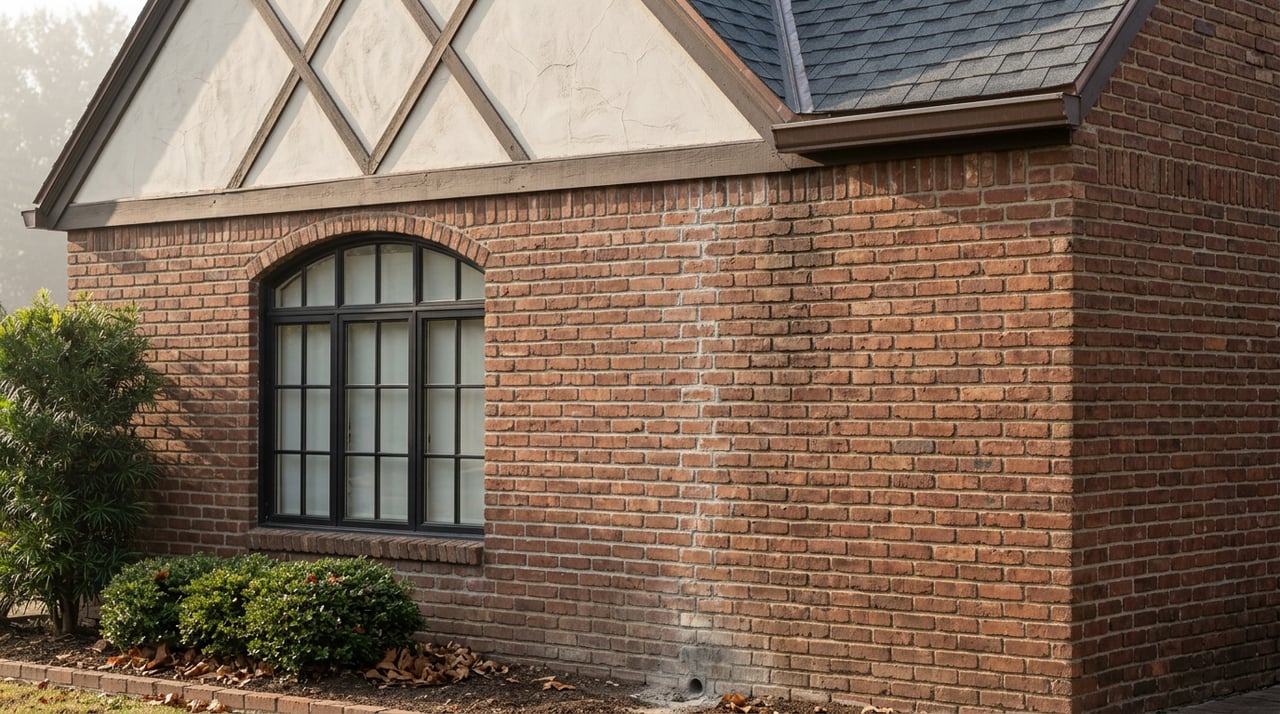
A conservation district is a lighter tool than a full historic overlay. The city's own guidance describes it as protecting a neighborhood's general character rather than preserving every original material down to the nail. That distinction matters in practice. The Dallas Morning News reports that, in a true historic district like nearby Winnetka Heights, the Landmark Commission reviews changes against national preservation standards, governing material choices in real depth. According to Blackline Renovations, in Kessler Park, review is limited to what a person standing on the public sidewalk can see: the front facade, the roofline, the windows facing the street. Interior work, additions at the rear that stay out of sightlines, and mechanical systems generally fall outside the ordinance entirely.
Before a contractor can pull a building permit for exterior work in the district, the owner needs a Work Review Form approved by the city's Development Services staff. Skip it and a code inspector can issue a stop-work order even if you already have a standard building permit in hand, since compliance with the conservation ordinance is required independent of whether a permit is needed for the work itself.
The submittal packet is specific in ways a first-time renovation buyer will not anticipate:
None of this touches the kitchen, the bathrooms, the electrical panel, or the foundation. Those decisions belong entirely to the homeowner and the standard Dallas building code, not to conservation district review.
The part that trips people up is assuming Kessler Park's rules apply uniformly across what feels like one continuous historic neighborhood. They do not. Dallas currently has 15 conservation districts, concentrated mostly in East Dallas and Oak Cliff, and the ones sitting closest to Kessler Park each have their own separate ordinance, their own founding date, and their own scope.
| District | Type | Established | What gets reviewed |
|---|---|---|---|
| Kessler Park | Conservation District | May 25, 2005 | Exterior only, street-facing elements |
| Stevens Park Estates | Conservation District | 2011, amended 2018, according to Stevens Park neighborhood association | Exterior only, includes a separate sub-district for Plymouth Road addresses |
| Kings Highway | Conservation District | Izeria reports: 1988 (first in Dallas) | Exterior only, explicitly discourages teardowns |
| Winnetka Heights | Historic (landmark) District | Landmark Commission oversight | Exterior materials and details, guided by national preservation standards |
Stevens Park Estates is its own case. The neighborhood association's plan passed City Council on September 28, 2011, then was amended on August 22, 2018, after homeowners approved it at a 76 percent rate, one of the highest approval margins of any conservation district petition in the city. It even carves out a distinct sub-district just for properties on Plymouth Road. A buyer who assumes Stevens Park operates under the Kessler Park ordinance because the two neighborhoods share a golf course and a border is working from the wrong rulebook the moment they file for a permit.
Here is the detail that actually changes a renovation budget: conservation district review in Kessler Park stops at the property line and the front elevation. Full kitchen and bathroom gut jobs, mechanical system replacements, and even interior structural changes proceed under standard permitting, with no design review layer added on top.
That gap explains a lot of what you see in current listings. A Tudor with original steel casement windows and intact millwork on the exterior can carry a fully modern kitchen and rebuilt plumbing behind that facade, and buyers pay a premium for exactly that combination: unaltered street presence with none of the interior compromises that come from a house nobody has touched since 1935.
The cost math backs this up. Mid-range modernization in Dallas currently runs $60 to $125 per square foot, covering semi-custom cabinetry and updated flooring. A full gut renovation, common in older Kessler Park stock where electrical and plumbing need complete replacement, runs $150 to $300 or more per square foot. Kitchen remodels alone land between $25,000 and $85,000 for mid-range to high-end work, climbing past $150,000 for a luxury gut. On top of hard costs, architectural design and structural engineering fees typically add $2,500 to $10,000 for a mid-range project, and soft costs across the board can run 15 to 20 percent of total investment. None of those numbers change because of the conservation district. What changes is the timeline on the exterior piece, since a new roof, replacement windows, or a front addition needs Work Review Form approval before the permit gets issued, while the kitchen gut next to it does not wait on anyone.
If a fixer-upper in Kessler Park, Stevens Park, or Kings Highway is on your list, a few questions save real time later.
Is Kessler Park a historic district? Part of it sits on the National Register of Historic Places. The zoning tool that actually governs renovations is the Kessler Park Conservation District, a separate and narrower designation than a city landmark historic district.
Does the conservation district review interior renovations? No. Review is limited to exterior elements visible from the street. Kitchens, bathrooms, and mechanical systems proceed under standard city permitting.
What if my property sits near the boundary with Stevens Park or Kings Highway? Confirm the exact ordinance with the city's Planning and Development office before assuming which rules apply. Adjacent conservation districts in this part of Oak Cliff have different founding dates, different sub-districts, and different review scopes even when they share a street.
A house that already complies with its district's exterior standards and a house that does not can look nearly identical from the curb and price hundreds of thousands of dollars apart once the real scope of work gets priced out. If you are weighing a renovation candidate in Kessler Park, Stevens Park, or anywhere else in North Oak Cliff, Diane Bearden can walk through the specific ordinance that applies to a property before you write an offer, not after.
This article is general information, not legal, tax or financial advice. Consult a qualified professional about your situation.
Stay up to date on the latest real estate trends.
October 22, 2026
October 15, 2026
October 8, 2026
October 1, 2026
September 24, 2026
September 17, 2026
September 10, 2026
September 3, 2026
August 27, 2026
Diane loves sharing her knowledge with her first-time home buyers and making their purchase a memorable event. She can advise you and create a portfolio that can give you that added edge to be successful in your real estate transaction.
Diane Bearden Barrett
6318 GASTON AVE DALLAS TX 75214