In East Dallas's Historic Districts, the Real Price Gap Is the Paperwork
August 13, 2026
August 13, 2026
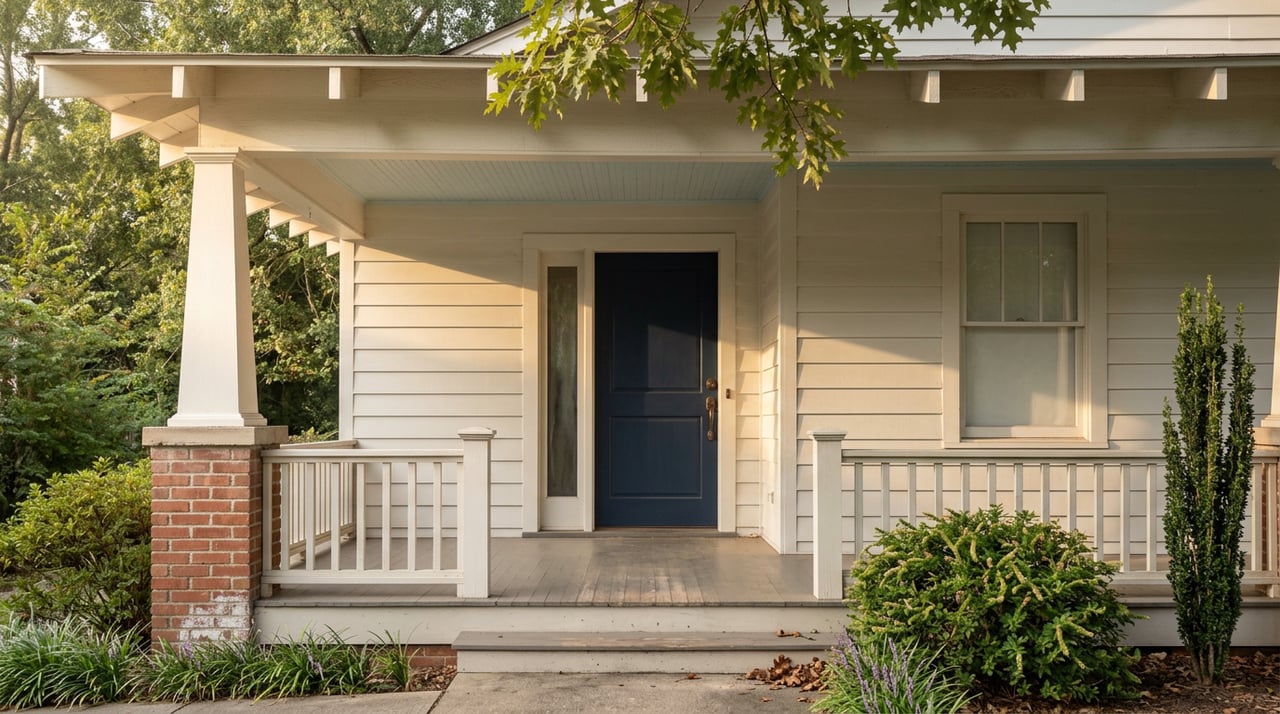
Two three-bedroom, two-bath houses sold on Worth Street in the Junius Heights Historic District about three months apart. 5710 Worth St sold in January 2026 for $350,000, a 1,708-square-foot house built in 1908, working out to $205 a square foot. A few doors down, 5614 Worth St closed in October 2025 for $599,000 at 1,416 square feet, built in 1910, at $423 a square foot and 104 percent of list. Same block. Same bedroom count. Nearly double the price per square foot.
If you're shopping in Munger Place, Swiss Avenue, or Junius Heights right now, that gap is the single most useful number in the market, and almost nobody explains what it actually measures. It isn't lot size. It isn't age, since both houses were built within two years of each other. It's how much of the historic-district approval process and the underlying foundation work the previous owner already absorbed before you ever toured the place.
Across Junius Heights, homes sold over the twelve months ending July 2026 ranged from $194 to $423 per square foot, averaging $315, on a median sold price of $599,000 across 13 closed transactions. That's a much wider spread than you'd find in a comparable newer Dallas subdivision, where finishes are more uniform and nobody's waiting on a city commission to approve a window swap. In a district built out between 1906 and the mid-1930s, the spread comes down almost entirely to renovation condition. Homes at the bottom of the range tend to still have original systems and unresolved deferred maintenance. Homes above $340 a square foot have generally had kitchens, baths, and structural issues addressed, with the paperwork to prove it.
Thirteen closed sales in twelve months works out to roughly one a month, and some months close more than others. With a sample that thin, the "median" swings hard depending on which one or two houses happened to close, not on any real shift in neighborhood value. A single restored $900,000 sale or a single as-is $350,000 sale can move the reported median by tens of thousands of dollars. In a market this thin, the headline number is close to useless on its own. The individual house's condition and paperwork trail is what actually prices it.
Renovation level explains the spread within a district. Which district you're in sets the floor.
| District | Established | Character | Typical Price Signal |
|---|---|---|---|
| Munger Place | Platted in the early 1900s by Robert S. Munger, billed as the first deed-restricted community in Texas | Prairie, Craftsman, and Colonial Revival homes with deep setbacks | Wide range, tied to restoration status |
| Swiss Avenue | Dallas's first local landmark district, designated 1973, listed on the National Register in 1974 | Roughly 200 homes in historical revival, Prairie, and Bungalow styles along an elegantly landscaped parkway | Restored homes routinely sell over $1 million |
| Junius Heights | Dallas's largest historic district, more than 700 structures on 190 acres | Largest collection of Craftsman Bungalows in the city, roughly 30 percent of the neighborhood | $350,000 to $965,000 over the past year, $194 to $423 per square foot |
Swiss Avenue sets a different baseline than Junius Heights before you factor in a single renovation detail. If you're comparing a listing in one district against a listing in another, you're not making an apples-to-apples comparison on condition alone. You're also pricing in which neighborhood's baseline you're buying into.
When a Junius Heights or Munger Place house prices at the top of its range, you're generally paying for two things that a cheaper comparable hasn't finished yet, and both take longer to resolve than most buyers expect.
The first is the foundation. The second is the city's sign-off on the exterior work itself.
Homes in these districts were built when pier-and-beam construction was standard, and North Texas sits on expansive clay soil that swells when it's wet and shrinks and cracks during long dry stretches. That shrink-swell cycle is the primary driver of foundation movement across the Dallas-Fort Worth area, and it hits pier-and-beam houses in older East Dallas neighborhoods especially hard because the piers themselves rest in that same unstable clay.
Repair costs vary by scope and by who you ask. A typical whole-house releveling in the DFW area runs $4,000 to $15,000, with severe cases exceeding $25,000. Per-pier costs range even more widely depending on material, from roughly $300 to $800 for basic concrete piers up to $3,000 to $7,000 for steel piers in more demanding soil conditions. If your inspection turns up foundation movement, get more than one contractor's estimate before you negotiate a credit, because the spread between a concrete-pier bid and a steel-pier bid on the same house can be substantial.
Here's the part that catches buyers off guard: in a Dallas Landmark District, foundation repair is exterior work, and exterior work requires a Certificate of Appropriateness before it can start.
In a Dallas Landmark District, the approval requirement isn't limited to street-facing changes. It extends to work on the back of the house, to structures the city doesn't even consider historically significant on the lot, to major landscaping changes, and to the foundation itself. Exceptions are rare.
That means the foundation credit you negotiate at closing isn't just a repair line item. It's a repair line item plus a city approval calendar, and the two run on different clocks.
Not every repair needs a full public hearing. Minor, like-for-like maintenance can be approved at the staff level as Routine Maintenance, and the city's own Landmark Review Process page states that most of these applications are processed within 7 to 10 business days, with a 21-day outer limit.
Anything more substantial, a full pier reset, a facade change, a new fence, has to go through a neighborhood task force review, a staff recommendation, and then a public hearing before the Landmark Commission, which meets on the first Monday of each month at Dallas City Hall. The city's own development guide puts the average timeline for this fuller process at about 30 days, with a legal maximum of 65 days for a contributing structure and 40 days for a non-contributing one. Approvals that do come through generally need to be acted on within about six months, or the certificate lapses and you're back at the start.
If a seller tells you the foundation issue is "already handled," ask to see the signed Certificate of Appropriateness, not just the contractor's invoice. A repair done without one can trigger stop-work orders and after-the-fact filings, which is not the kind of paperwork you want to inherit along with the house.
A few questions worth asking before you go under contract on a house in Munger Place, Swiss Avenue, or Junius Heights:
Does foundation repair really need city approval in these districts? Yes. Foundation repair is treated as exterior work under Dallas's historic preservation rules, and a Certificate of Appropriateness is required before it begins, even if the work happens below grade and out of sight from the street.
What if I have storm damage and need repairs fast? Dallas's Office of Historic Preservation has said it will try to turn around storm-related Certificate of Appropriateness requests within a couple of days so repairs can begin, though the certificate itself is still required before work starts.
Does a National Register listing add another layer of restriction on top of the local rules? Generally not for a private owner. It's the local Dallas Landmark District designation that triggers the Certificate of Appropriateness requirement. National Register status by itself is largely honorary unless federal or state funding or permits are involved.
Are fees for a Certificate of Appropriateness the same for every project? Fee schedules vary by project type and have changed over time, so confirm current costs directly with the city's Office of Historic Preservation before you budget a renovation.
A century-old house in one of these districts is never priced on square footage alone. It's priced on how much of the repair work and the approval process the current owner has already carried, and how much of that calendar you'll be starting from scratch. Reading a listing that way, instead of just comparing dollars per square foot, is what tells you whether the higher-priced house down the block is actually the better deal.
If you're comparing houses in Munger Place, Swiss Avenue, or Junius Heights and want a read on what a specific listing's price is actually telling you, Diane Bearden has spent more than two decades working East Dallas and the surrounding neighborhoods. Contact Diane for a personalized market consultation before you write your next offer.
Stay up to date on the latest real estate trends.
October 8, 2026
October 1, 2026
September 24, 2026
September 17, 2026
September 10, 2026
September 3, 2026
August 27, 2026
August 20, 2026
August 13, 2026
Diane loves sharing her knowledge with her first-time home buyers and making their purchase a memorable event. She can advise you and create a portfolio that can give you that added edge to be successful in your real estate transaction.
Diane Bearden Barrett
6318 GASTON AVE DALLAS TX 75214